Resources/Industry Insights
Industry Insights

Remote Pulse Oximetry Monitoring: How It Works, Devices & Reimbursement Codes

Team Circle Health
Team Circle Health
Author
June 17, 20265 min read
Remote Pulse Oximetry Monitoring: How It Works, Devices & Reimbursement Codes

How remote pulse oximetry monitoring works, which devices qualify, and the RPM reimbursement codes used in 2026 care programs.

Pulse oximetry is one of the most clinically actionable data points available in remote patient monitoring. For patients with chronic respiratory or cardiovascular conditions, daily oxygen saturation readings can catch deterioration days before symptoms become critical - and do it entirely outside the clinic. As CMS has expanded its RPM reimbursement framework in 2026, pulse oximetry monitoring has become both a stronger clinical tool and a more financially viable program for medical practices.

How Remote Pulse Oximetry Monitoring Works

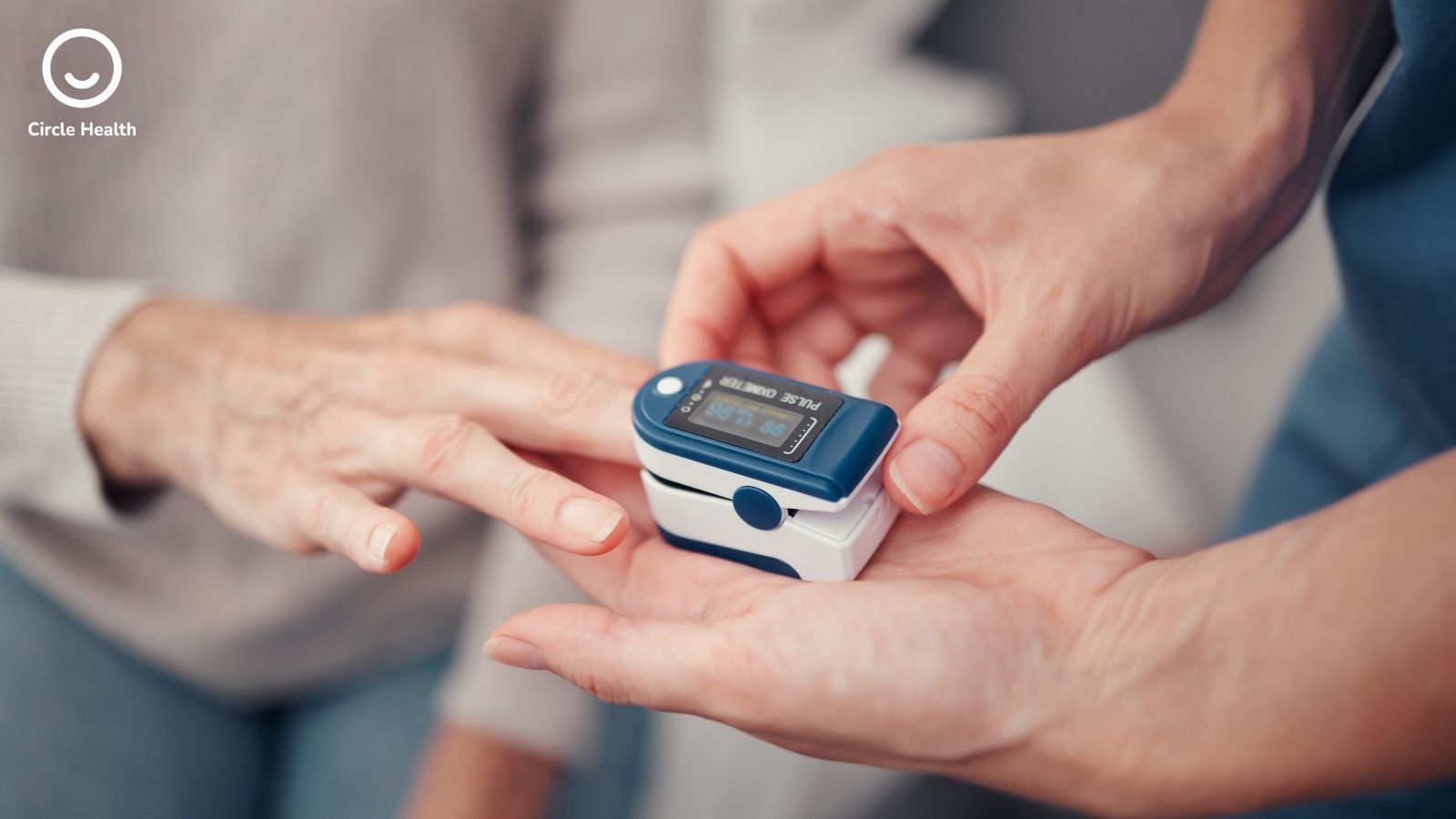
Remote pulse oximetry helps manage chronic respiratory conditions at home by continuously tracking blood oxygen (SpO2) levels and pulse rate. Connected pulse oximeters provide real-time alerts so physicians can intervene early if a patient's readings fall outside personalized thresholds.

The technical workflow is straightforward:

  • The patient wears or clips a connected pulse oximeter - typically on the fingertip - at designated intervals or continuously, depending on the monitoring protocol
  • The device measures SpO2 (peripheral oxygen saturation) and pulse rate, then transmits the data automatically via cellular or Bluetooth connection to a secure cloud platform
  • Clinical staff review the transmitted readings, compare them to individualized alert thresholds, and document any response actions in the patient's EHR
  • Escalation protocols are triggered when readings fall outside defined parameters - for example, SpO2 consistently below 90% or a sudden drop in perfusion index

The key distinction is that all data transmission must be automatic and electronic. Over-the-counter pulse oximeters that are sold as general wellness products are not evaluated by the FDA for use in clinical decision-making - only FDA-cleared medical-grade devices qualify for use in reimbursable RPM programs. For a broader overview of how RPM functions across device types and clinical use cases, Circle Health Care's explainer on RPM meaning in medical practice covers the core mechanics in detail.

Clinical Use Cases: Who Benefits Most

Pulse oximetry monitoring is not condition-specific by CMS definition, but in practice, it delivers the most measurable clinical value for respiratory and cardiovascular populations.

Chronic Obstructive Pulmonary Disease (COPD)

Because symptoms of mild COPD aren't always apparent, patients can experience critical drops in blood-oxygen levels and not even know it. Using a pulse oximeter for COPD remote patient monitoring allows physicians to see daily readings and intervene before an exacerbation escalates. For COPD patients, a daily SpO2 trending below 88% is a clinical signal that enables a prophylactic steroid course - preventing progression from an outpatient exacerbation to a hospitalization.

Congestive Heart Failure (CHF)

A pulse oximeter helps providers establish baseline oxygen saturation and monitor changes in blood oxygen levels for heart failure patients - and is effective for measuring a patient's response to treatment. In combination with daily weight monitoring, pulse oximetry gives care teams a two-variable early warning system for fluid retention and reduced cardiac output.

Asthma and Post-Surgical Recovery

When an asthmatic patient's oxygen levels trend downward, it can indicate impending respiratory failure. Pulse oximetry is also used to predict cardiopulmonary morbidity after lung resection in cancer patients and to monitor lung deterioration during COVID-19 recovery at home.

For practices managing elderly patients across these conditions, Circle Health Care's guide on remote elderly care covers how RPM technology integrates into senior-specific monitoring programs under Medicare.

Device Requirements for CMS Reimbursement

Not every pulse oximeter on the market qualifies for RPM billing. CMS requires that devices used in reimbursable RPM programs meet the following criteria:

  • FDA clearance for medical purposes - consumer-grade or wellness oximeters sold over the counter do not qualify. Only devices cleared under the FDA's 510(k) process for clinical use are eligible
  • Automatic digital transmission - the device must transmit data electronically without manual patient entry
  • Condition-appropriate measurement - the device must capture the physiologic parameter being monitored (SpO2 and pulse rate for pulse oximetry programs)

The FDA recognizes that during the COVID-19 pandemic, many people purchased OTC pulse oximeters that are considered general wellness products - these products are not evaluated by the agency for use in clinical decision-making or determining whether to seek medical intervention. The FDA pulse oximeter guidance page outlines the distinction between prescription, OTC medical-grade, and general wellness devices clearly.

2026 CPT Codes and Reimbursement for Pulse Oximetry RPM

Pulse oximetry is explicitly named in CMS CPT code descriptors for remote physiologic monitoring. CPT 99445 covers remote monitoring of physiologic parameters - including pulse oximetry - with device supply and daily recording or alert transmission for 2–15 days in 30 days. CPT 99454 covers the same service for 16–30 days in 30 days. The full 2026 code set applicable to pulse oximetry RPM programs is:

  • CPT 99453 (~$22) - One-time device setup and patient education
  • CPT 99445 (~$47) - Device supply for 2–15 days of transmitted data in 30 days (new in 2026)
  • CPT 99454 (~$47) - Device supply for 16–30 days of transmitted data in 30 days
  • CPT 99470 (~$26) - First 10 minutes of clinical management time with required patient interaction (new in 2026)
  • CPT 99457 (~$50) - First 20 minutes of clinical management time with required patient interaction
  • CPT 99458 (~$41) - Each additional 20 minutes of clinical management time

Both CPT 99445 and CPT 99470 are not additive with their corresponding codes - 99445 cannot be billed in the same month as 99454, and 99470 cannot be billed in the same month as 99457. The 2026 addition of shorter-duration codes is particularly significant for pulse oximetry programs, where patients with acute exacerbations may be monitored intensively for 7–10 days rather than a full month. For CMS coverage criteria and documentation requirements, the CMS Remote Patient Monitoring coverage page is the authoritative reference.

Practices running pulse oximetry programs alongside broader chronic disease management programs can bill RPM concurrently with Chronic Care Management (CCM) and Transitional Care Management (TCM) - provided documented time for each code does not overlap within the same calendar month.

Building the Clinical Workflow Around Pulse Oximetry Data

Building the Clinical Workflow Around Pulse Oximetry Data

Pulse oximetry data is only actionable if the clinical workflow behind it is designed to respond. Key workflow elements include:

  • Individualized alert thresholds - a blanket SpO2 alert at 90% is appropriate for some patients but too conservative for others with chronic hypoxemia; calibrate thresholds per patient baseline
  • Escalation protocols by reading severity - define which drops trigger a care manager call vs. an immediate provider notification vs. a 911 referral
  • Documented response time - for audit compliance, every alert review must be logged with time, staff role, and clinical decision
  • Integration with the EHR - readings should post directly to the patient chart, not live only in a separate RPM dashboard

Circle Health Care's RPM program handles device supply, patient onboarding, threshold configuration, alert management, and CMS-compliant billing documentation - enabling practices to launch or scale a pulse oximetry monitoring program without building internal infrastructure from scratch.

Conclusion

Remote pulse oximetry monitoring is one of the highest-value applications in the RPM toolkit - particularly for practices serving COPD, heart failure, and post-surgical populations. The 2026 introduction of shorter-duration CPT codes has expanded billing flexibility significantly, making it possible to generate reimbursement for episodic and transitional monitoring that previously fell below the 16-day billing threshold.

The clinical and financial case for pulse oximetry RPM is strong. But realizing that value depends on three things: using FDA-cleared devices that meet CMS transmission requirements, building alert and escalation workflows that convert data into timely clinical action, and applying the correct CPT codes with audit-ready documentation. Practices that get all three right will find pulse oximetry monitoring among the most impactful - and most sustainable - programs in their remote care portfolio.

Frequently Asked Questions

Q1. Does a standard fingertip pulse oximeter from a pharmacy qualify for RPM billing?

No. Only FDA-cleared medical devices that automatically transmit data digitally qualify for RPM reimbursement.

Q2. What SpO2 threshold should trigger a clinical alert in a pulse oximetry RPM program?

Thresholds should be individualized. Generally, SpO2 below 90% may indicate concern, while 88% or lower often requires urgent attention.

Q3. Can pulse oximetry RPM be billed alongside CCM in the same month?

Yes. RPM and CCM can be billed together if the documented clinical time for each service does not overlap.

Q4. What is the difference between CPT 99445 and CPT 99454 for pulse oximetry monitoring?

CPT 99445 applies to 2–15 monitoring days, while CPT 99454 applies to 16–30 days. Both codes cannot be billed together for the same period.

Q5. Who can perform the clinical management time billed under CPT 99457 or 99470 for pulse oximetry RPM?

Qualified providers bill these services, while nurses and other clinical staff can assist with monitoring and patient outreach under supervision.

Q6. Is remote pulse oximetry monitoring covered for patients with acute conditions, or only chronic ones?

Both. Medicare allows RPM for chronic and acute conditions, including post-surgical recovery and short-term respiratory monitoring.

Tags:

Industry InsightsGeneralHealthcare

Share this article:

Ready to get started?Request Demo